
Gin Rummy Masters: Card Game
YallaPlayCard
4.6251.00 Reviews
- Version
- 2.32.8
- Installs
- 50.00K
- Age Rating
- Everyone
Screenshots
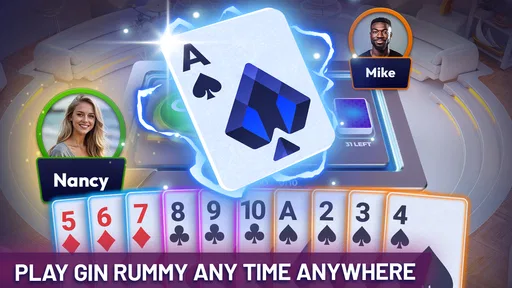
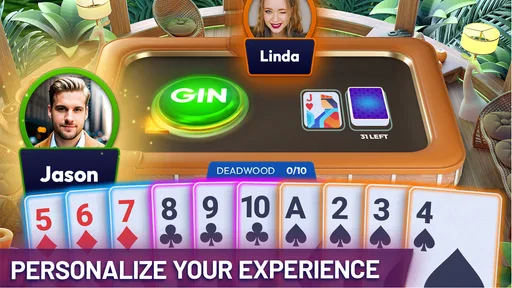



Our Review of Gin Rummy Masters: Card Game
 Analysis by Appyee
I spent my time with Gin Rummy Masters looking at one central promise: bringing a live, competitive gin rummy table to a phone without making the game feel like a solitary puzzle. That focus matters because card games often split into two very different experiences. Some are quiet, turn-based exercises against predictable computer opponents, while others are social games where the pressure comes from playing against a real person. This title clearly aims for the second group.
It is a free card game from YallaPlay, available for players aged Everyone, and it has already attracted over two thousand ratings with a strong average of 4.6. The store page presents it as a real-time way to play with friends, earn rewards, and work up a leaderboard. In my experience, the most important part of that description is not the reward language; it is the real-time format. The live pace changes how I read every discard, how carefully I manage the clock between turns, and how much a small mistake can matter.
That makes this a better fit for someone who wants gin rummy to feel like a short competitive match rather than a background activity. It is also why I would not recommend it automatically to every fan of the card game. If you prefer unlimited thinking time, a completely private offline session, or a simple rules-only presentation, the live approach can feel more demanding than relaxing.
Why the real-time format changes gin rummy
The capability worth paying attention to is the live table itself. In a normal solo card game, I can pause, reconsider a move, or leave the screen for a few minutes without affecting another player. A real-time match removes much of that comfort. I have to decide whether a discarded card is genuinely useful, whether picking from the pile reveals too much about my plan, and whether holding a card for a possible meld is worth slowing down my hand.
That pressure gives familiar gin rummy decisions more weight. A card that looks harmless in a leisurely game can become a liability when I am trying to keep my hand flexible while also responding quickly. The result is not simply “gin rummy on a smaller screen.” The phone becomes a compact table where observation and timing work together.
I also like that the format gives the game a natural purpose beyond completing one hand. The store summary points toward rewards and leaderboard progress, so the experience is designed to encourage repeat play. That can be motivating when I want a quick competitive routine. A short session feels more meaningful when I am practicing decisions against another person instead of only clearing a computer-generated challenge.
At the same time, the competitive layer can change my mood. I may open a card game expecting to unwind and then find myself replaying a poor discard in my head. That is not a flaw in the rules; it is a consequence of making each match feel live. I found the game most enjoyable when I treated the leaderboard as a reason to improve rather than as a demand to win every hand.
Reading the table instead of chasing every meld
My most useful adjustment was to stop treating every attractive combination as something I had to pursue. In fast play, it is easy to grab a card because it completes part of a run, only to discover that the rest of the hand has become awkward. I got better results by keeping a flexible hand early and watching what the other player rejected. A discard is information, but it is not a guarantee. Someone may be avoiding a rank for one reason while holding an entirely different combination.
This is one of the non-obvious strengths of the live format: it rewards disciplined observation more than frantic tapping. The game does not need a complicated interface to create depth. The pressure comes from deciding what information is reliable and what is merely tempting. I recommend new players spend their first sessions noticing patterns in their own decisions rather than obsessing over the leaderboard.
A practical habit is to identify the cards that are doing the least work in the hand before the next turn arrives. If a card has no realistic connection to either a set or a run, it is often a better discard than a card that might become useful later but is currently tying up the hand. I would not follow that rule blindly, especially when the opponent’s discards suggest a dangerous draw, but it gives the live pace a simple structure.
Another helpful habit is to avoid making a late change merely because a new card looks exciting. In a real-time match, a sudden draw can encourage a player to abandon a nearly complete plan. I found it safer to ask whether the new card improves the hand immediately or only creates another possibility. That distinction is small, but it prevents the kind of rushed decision that makes a short match feel unnecessarily chaotic.
What playing with friends feels like
The social promise is especially useful when I already know someone who enjoys gin rummy. A friend does not need a long explanation of why a close hand was interesting; the shared context makes a quick match feel more personal than playing an anonymous puzzle. The live structure also gives a casual challenge a clear beginning and end, which suits a spare moment better than a long tabletop session.
Still, “with friends” should not be interpreted as “only for friends.” The competitive design and leaderboard framing suggest that the game also wants players to measure themselves against a wider pool. For me, that creates two different uses. I can play for relaxed rivalry with someone familiar, or I can use matches as practice for making faster decisions under pressure.
Those uses are not identical. A friendly session lets me experiment with unusual choices because the point is conversation and amusement. A leaderboard-minded session encourages safer play and stronger attention to card information. I appreciate having that range, although players who dislike any sense of ranking may find the competitive framing less appealing than a traditional pass-and-play app.
How a typical session fits into everyday life
The best scenario for me was a short break when I wanted something more engaging than scrolling but did not have time to start a large game. Gin rummy works well in that space because the rules are familiar enough to enter quickly, while the live opponent prevents the session from feeling repetitive. I could focus on a hand, make decisions, and stop thinking about the game when the match ended.
That same scenario shows why the real-time capability is both useful and restrictive. I would not begin a match while waiting for an important call or when I knew I might need to put the phone down immediately. Another player is part of the experience, so interruptions are more disruptive than they would be in a solo card game. My advice is to treat each match as a small appointment, even if it only takes a few minutes.
It also works well as a daily practice routine. Rather than playing for a long stretch, I would set a simple goal for a session: protect the hand from unnecessary deadwood, pay closer attention to discards, or avoid rushing after a promising draw. This approach makes the game useful even when the result is not a win. I came away with a clearer understanding of my habits, especially the tendency to hold a card for too long because it might eventually fit.
For beginners, the most efficient workflow is to learn the basic gin rummy rhythm before worrying about rewards or leaderboard position. First, recognize the difference between a card that completes a likely combination and one that merely looks close. Next, watch which cards are being rejected. Finally, choose a discard with a reason instead of selecting the first card that seems inconvenient. That sequence reduces the mental load created by the live timer and makes the game feel less hurried.
Where it differs from quieter alternatives
Compared with a standard offline gin rummy app, this game’s main advantage is the human uncertainty. A computer opponent can be useful for learning rules and testing a particular strategy, but a real person may change direction, conceal a useful plan, or make an unexpected discard. That unpredictability keeps the familiar card structure fresh.
The trade-off is control. Offline alternatives are usually better when I want to pause, replay a situation, or practice without social pressure. They may also suit someone who is still learning the scoring flow and needs time to understand why a hand succeeded or failed. Gin Rummy Masters is more compelling once I am comfortable enough to make decisions without stopping after every draw.
It also differs from a physical table in an important way. A phone makes access convenient, and the leaderboard gives repeated matches a sense of progression, but the screen cannot replace the atmosphere of sitting across from another person. If what I want is conversation, visible reactions, and a shared tabletop ritual, a physical game remains better. If I want a compact competitive match when no one is nearby, this app has the clearer advantage.
Compared with broad card-game collections, its specialization is a benefit. I do not have to move through unrelated modes before reaching gin rummy. That focus is good for players who already know they want this particular game. On the other hand, someone looking for solitaire, poker, or several different card formats will get more variety from a general collection than from a dedicated gin rummy experience.
Rewards, rankings, and the cost of competition
The reward and leaderboard elements give repeat play a direction, but they also create the main psychological trade-off. A visible ranking can encourage me to study my decisions and return with a plan. It can just as easily turn a casual hand into a chase where I keep playing after I have stopped enjoying myself. I recommend setting a personal stopping point before a session, especially after a frustrating loss.
The game is free to download, which makes trying the live format straightforward. It includes optional in-app purchases ranging from $0.99 to $359.99 per item. That is the detail I would take seriously before spending. A free entry point is useful, but the presence of a wide purchase range means I would review each transaction carefully and decide in advance whether I am willing to spend anything at all.
I would not view purchases as a reason to dismiss the game automatically, but I also would not install it for a child without discussing spending expectations first. The Everyone age rating describes the content category, not a personal budget plan. For adults, the sensible approach is to enjoy the core card play first and treat any optional purchase as a separate decision rather than as part of learning the game.
The reward structure can be most valuable when it gives a player a reason to improve one specific weakness. For example, I might use several matches to work on discarding safely instead of judging the session only by the final position. That turns the competitive layer into a training tool. If rewards simply make me play longer without making better decisions, they are adding time rather than value.
Performance expectations and practical setup
The current version is 2.32.8 and the game supports Android 7.0 or later. That makes it accessible to people who are not using a recent phone, although live card play still benefits from a stable connection and a screen that responds consistently. I would avoid starting a match while moving between unreliable networks because the real-time format leaves less room for technical hesitation.
A comfortable setup matters more here than it might in a turn-based solitaire title. I prefer holding the phone in a way that keeps the cards clear and leaves enough time to inspect the hand before selecting a discard. On a smaller display, rushing can lead to a misread card or an accidental choice. Taking a moment to organize my attention is more useful than trying to play at maximum speed from the opening turn.
The game has over fifty thousand installs, so it is not an obscure experiment with no visible player interest. Its average of 4.6 from around two thousand ratings also suggests that the basic experience is landing well with many users, while the separate review count sits at a little over two hundred. I treat those figures as a useful signal, not as a substitute for deciding whether live gin rummy matches my own habits.
One small but important question for a potential player is whether the game suits their available attention. If I have only a moment to spare and might be interrupted, I would choose a solo alternative. If I can give a match uninterrupted focus, the live format is much more rewarding. The right choice depends less on whether I like card games in general and more on whether I like making card decisions under a shared pace.
Who gets the most from this game
I would recommend it first to players who already understand the basics of gin rummy and want more tension than a predictable computer opponent provides. The real-time setting makes familiar choices feel sharper, while the friend-oriented and leaderboard-oriented design gives the game more than one reason to return. It is particularly suitable for short competitive sessions rather than long, relaxed campaigns.
It can also help an intermediate player build better habits. Watching discards, reducing deadwood, and resisting attractive but unrealistic combinations are skills that become easier to notice when another person is reacting to the same pool of cards. The live pace exposes indecision, which is uncomfortable at first but useful if I treat it as feedback.
I would be more cautious about recommending it to someone completely new to gin rummy. The game may be approachable, but real-time competition is not the gentlest place to learn every rule and scoring detail. A slower tutorial or offline practice app could be better for understanding the fundamentals first. Once the basic hand-building logic feels natural, moving here makes more sense.
I would also point frequent spenders toward caution. The free download is a reasonable way to test the experience, but the purchase range means the game should be approached with a clear limit. Players who dislike rankings, rewards, or any pressure to return may prefer a plain digital deck with no competitive framing. That is not a criticism of this title; it is a mismatch between its central capability and their preferred style.
After using it, my view is straightforward: the live opponent is the reason to choose this game. It gives gin rummy immediacy, uncertainty, and a reason to sharpen decisions instead of merely passing time. The same feature requires uninterrupted attention and can make losses feel more personal, so it should not be mistaken for a purely relaxing card app.
For me, the strongest use is a focused break with enough time for one complete match, especially when I want to challenge a friend or practice reading discards against a real person. The free entry point makes that test easy, and the 4.6 average shows that the approach has found a receptive audience. I would install it for competitive gin rummy, keep spending separate from the enjoyment of the cards, and choose a slower alternative whenever I need to pause, learn from scratch, or play without pressure.
Verdict
Strengths of Gin Rummy Masters: Card Game
- Quick matches are ideal for short gaming sessions.
- Simple rules make it accessible to beginners.
- Offline play is useful when no internet connection is available.
- Different difficulty levels provide a gradual challenge.
- Clean card-focused interface keeps gameplay easy to follow.
Limitations of Gin Rummy Masters: Card Game
- Ads may interrupt the experience between matches.
- Advanced players may find the AI somewhat predictable.
- Limited multiplayer options reduce competitive variety.
- Some features may require in-app purchases or premium access.
- Replay value can decline after mastering the available modes.
Other Releases by YallaPlay
View All
Spades Masters - Card Game
Card4.6
Similar Picks in This Category
View All
Solitaire - Classic Card Games
MobilityWare4.6

UNO!™
Mattel163 Limited4.3

Spider Solitaire: Card Games
MobilityWare4.6

Solitaire.com - Classic Cards
Tripledot Studios Limited4.7

Plants vs. Zombies™ Heroes
ELECTRONIC ARTS4.1

Hearthstone
Blizzard Entertainment, Inc.4.1
Frequently Asked Questions
What is Gin Rummy Masters: Card Game?
Gin Rummy Masters: Card Game is a digital version of the classic two-player Gin Rummy experience. Players draw and discard cards to create melds, including sets and runs, while trying to reduce the value of unmatched cards in their hand. The app is designed for quick matches and may offer different opponents, difficulty levels, or game modes depending on the version installed.
How do you play Gin Rummy Masters: Card Game?
Each round generally begins with players receiving cards and taking turns drawing one card before discarding another. The objective is to organize your hand into matching groups and sequences, then knock or declare Gin when the hand is ready. Success depends on remembering discarded cards, predicting the opponent’s strategy, and deciding when to end the round instead of waiting too long.
Can I play Gin Rummy Masters offline?
Many Gin Rummy applications include offline play against computer-controlled opponents, which can be useful when traveling or when you do not have a reliable internet connection. However, online competitions, leaderboards, advertisements, cloud synchronization, and certain rewards may require connectivity. Check the app’s store listing and test the available modes after installation, as offline features can vary by device and update.
Is Gin Rummy Masters: Card Game free to download?
Gin Rummy Masters: Card Game may be available as a free download, but free access does not always mean that every feature is included without limitations. The app may contain advertising, optional purchases, premium content, or resources used for progression. Before downloading, review the current Google Play or App Store listing for pricing, in-app purchase details, supported devices, and any subscription information.
Is Gin Rummy Masters: Card Game suitable for beginners?
The game can be suitable for beginners because digital Gin Rummy usually provides a straightforward interface and allows players to learn through repeated matches. New users should first understand sets, runs, deadwood points, knocking, and going Gin. Starting with an easier opponent or tutorial, when available, is recommended before entering more competitive modes, since experienced opponents can make early matches challenging.
Play our best games!


